
In a previous article, we discussed the “Radar Syndrome” and how those affected by it tend to break the law unless they find themselves under the watchful eye of a camera monitoring their behavior. But this pattern is not limited to the roads. It can also extend into the workplace, giving rise to what I call the “Supervisor Syndrome.”
This refers to the person who does not work from an internal sense of responsibility, but instead is always waiting for someone to watch them, a manager to monitor them, or a performance review to temporarily motivate them to take action—rather than being guided by their own conscience.
This type of employee does not measure work by productivity, but by appearances. They take frequent breaks, viewing them as an “earned right” or a necessary incentive to keep going. They may spend long hours of the workday leaving personal belongings on their desk to create the impression that they are present and busy. They move quickly between offices and corridors, appearing to be overwhelmed with tasks, while the reality is entirely different.
Hours are wasted on tasks that may require only a few minutes to complete.
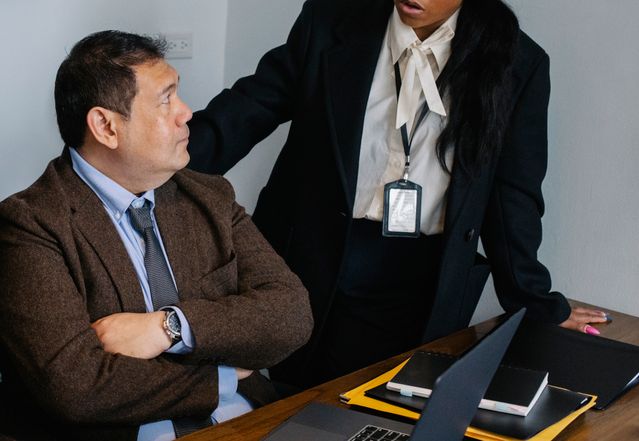
When the manager is nearby, they suddenly transform into the ideal employee: visibly energetic, constantly moving, and excessively engaged. In meetings, they are often among the most vocal participants, skilled at theorizing and offering criticism of others, while their actual contribution to getting things done remains limited or almost nonexistent.
They have mastered the art of creating an image more than creating meaningful work.
But the moment the manager leaves, everything returns to its old routine. The pace slows, motivation fades, and the sudden burst of activity disappears.
Worse still, this behavior becomes even more pronounced as performance reviews and promotion cycles approach—as though achievement were a temporary season or an annual public-relations campaign rather than an ongoing professional commitment.
The real problem with the “Supervisor Syndrome” is that it does not harm the organization alone; it also drains teams from within. It creates an unfair environment in which hardworking employees feel that their efforts are being lost amid noise and showmanship, while those who are skilled at appearances receive the same attention—or even more.
Over time, a team can lose its spirit when image becomes more important than results and movement becomes more important than achievement.
True work does not require constant supervision, because professionalism begins with conscience and personal accountability.
A successful employee is someone who performs whether the manager is present or not, because they understand that a person’s value is reflected in what they contribute, not in what they claim.
Organizations do not thrive through supervision alone. They thrive through a culture of self-accountability and through people who believe that fulfilling their responsibilities should never depend on the presence of a camera, a manager, or an upcoming performance review.