Category: Uncategorized

  • Relationships Between Professionalism and “Wasta”

    Relationships Between Professionalism and “Wasta”

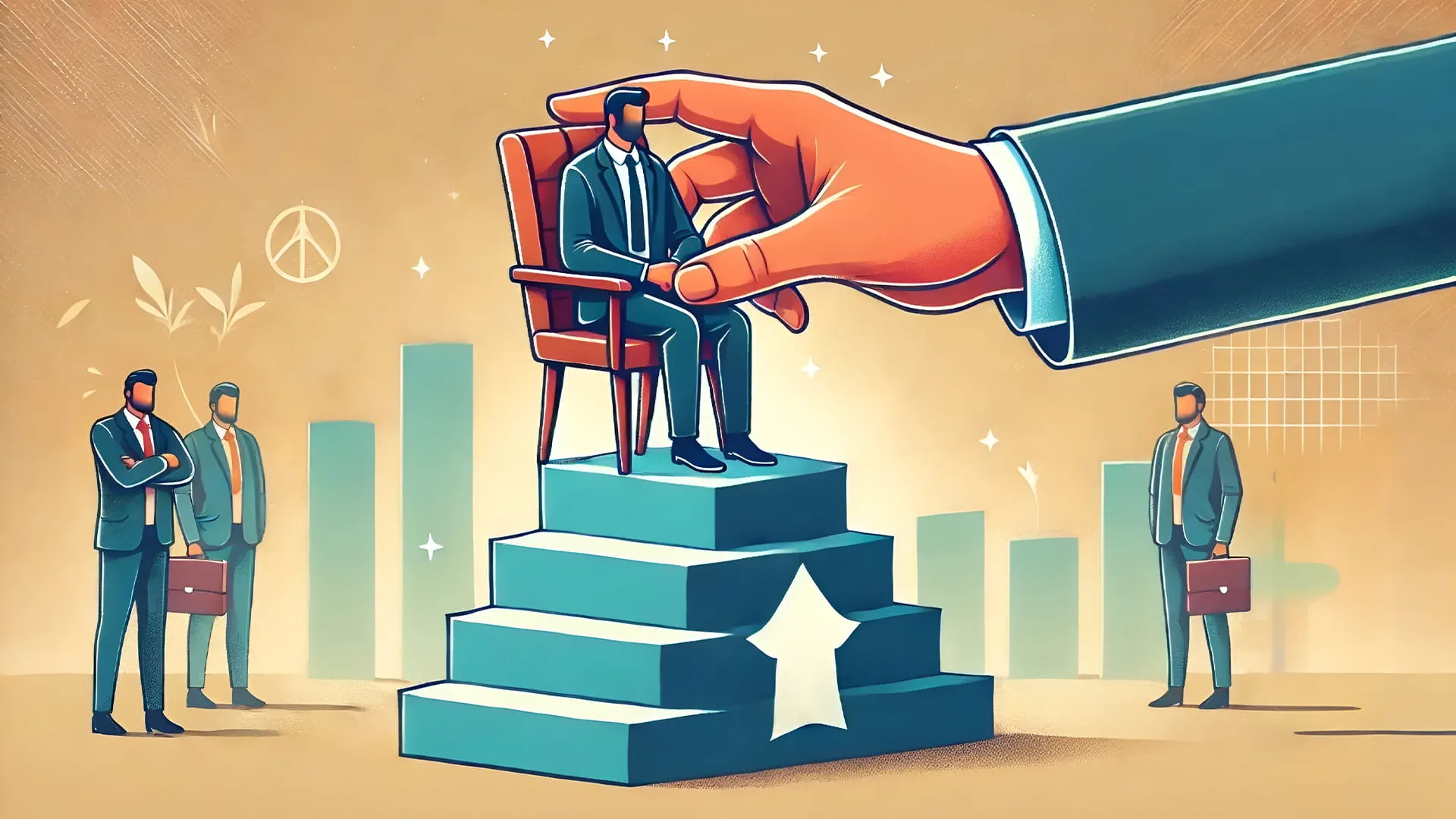
    There is a common confusion between professional relationships built over years of work and attendance at specialized events, and the concept of wasta (favoritism or nepotism) as a negative social practice. The former is based on trust and prior knowledge of people’s competence, along with clear professional expectations. The latter is an overstep of standards, replacing merit with favoritism, and is a form of professional corruption.

    Let’s be realistic: professional life relies on relationships because they reduce uncertainty, save time, and improve coordination and communication. Relying on someone you have previously worked with is not wasta as long as opportunities are available to everyone under declared criteria. Proper professional relationships open the door to fair competition, not a shortcut at the expense of others.

    For young job seekers, building a strategic network is an indispensable skill. It begins with clearly and convincingly defining your professional identity: a concise clear resume, a portfolio or project samples, and measurable achievements. During downtime, invest in acquiring new skills through accredited courses, short projects, or volunteering that demonstrates your ability to deliver.

    Being present in the professional community is essential: attend events, specialized associations, hackathons, and more. Opportunities come to those whose work is visible, and those active on professional platforms like LinkedIn should know that applying for jobs and waiting is not enough—you must continuously engage, request informational interviews or short meetings, send messages clarifying the value you can add, follow each meeting with a brief thank-you note, and share useful content or practical suggestions that reinforce your presence and turn initial contact into a meaningful relationship.

    Expand your circles beyond close acquaintances, as distant connections often open unexpected doors. Always maintain ethics: ask for a fair chance, not an exception; reject any violations of policies or regulations regardless of motive. Know that entrepreneurs also need professional networks to build future teams and secure partners, expertise, and suppliers.

    In conclusion, professional relationships are social capital gained through practice and flourish when merit, integrity, and mutual benefit come together. With this formula, relationships become an accelerator for your career, not a substitute for your competence.
  • “The Bridge”… A Bridge Between Digital Worlds

    “The Bridge”… A Bridge Between Digital Worlds

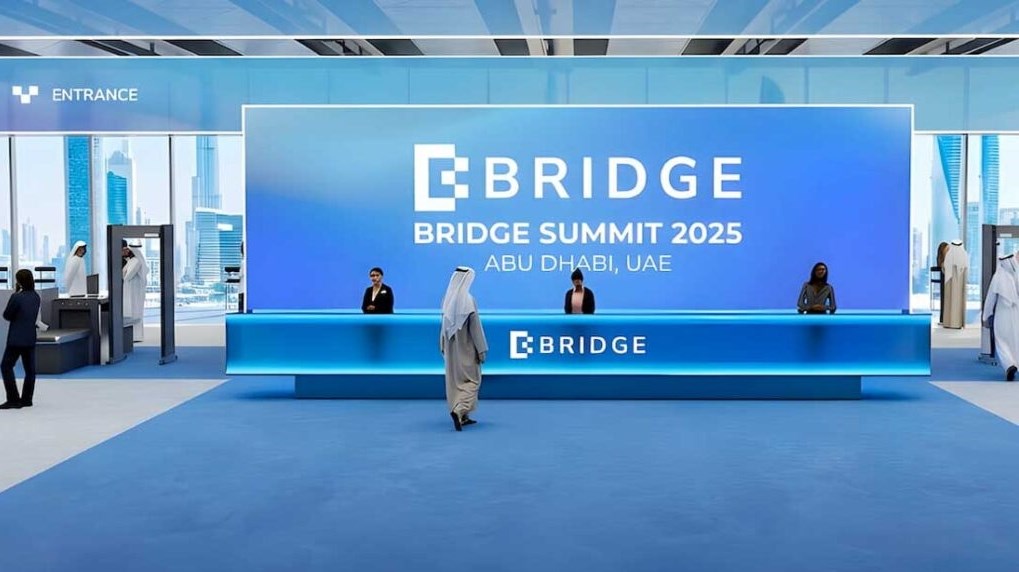
    The activities of the Bridge 2025 Summit kicked off in Abu Dhabi at the Abu Dhabi National Exhibition Centre, bringing together a global ecosystem of media, content, and entertainment creators to explore the future of the sector. The summit spans seven tracks, including digital content, artificial intelligence, humanitarian media, film production, the creative economy, the future of journalism, and the influence industry. Announced figures indicate broad participation, with tens of thousands of creators, professionals, and institutions, reinforcing the UAE’s position as an international platform for shaping the next media landscape.

    This year, Bridge felt closer than ever to a true bridge connecting all digital worlds: production, journalism, and media; gaming and entertainment; and the digital economy. These sectors are no longer isolated islands, but an interconnected ecosystem that feeds into itself and moves together, driven by value-generating technologies and creative skills.

    The spirit of innovation was evident from the very first moment, as the summit’s official app topped the business applications chart in the country’s app store on opening day—an indicator of strong engagement and interaction from the specialized audience.

    What is particularly inspiring is the prominent presence of Emirati women on entrepreneurship platforms, where they presented practical solutions that employ artificial intelligence in services and digital experiences, while also addressing its downsides, such as fake and misleading content. Such spaces are not an end in themselves, but a launchpad for ideas that grow into companies, products, and new standards of practice.

    With the expansion of international partnerships woven by Bridge under the umbrella of the National Media Office, opportunities for knowledge transfer increase, as does the building of local value chains capable of competing globally.

    In this way, Bridge proves that the future belongs to integrated media—an ecosystem that balances creativity and technology, and gives local talent a platform for global impact.

  • 54 Years of Women’s Prosperity

    54 Years of Women’s Prosperity

    On the 54th Union Day, our country adorns itself in its finest form, built upon the foundations laid by the late Sheikh Zayed bin Sultan Al Nahyan and his brother Sheikh Rashid bin Saeed Al Maktoum, may God rest their souls, along with their fellow Rulers of the Emirates. Our nation, which today takes pride in its achievements under wise leadership, continues on a path initiated by the founding figures and carried forward by successive generations.

    Since its inception, the United Arab Emirates has established women as an essential partner in the nation-building project, with the support of the Mother of the Nation, Her Highness Sheikha Fatima bint Mubarak, who has been—and continues to be—a steadfast supporter of both the nation and its women. The giving of the Mother of the Nation is boundless; it has not been limited to empowerment so that women could merely accompany the journey of the Union, but has continued to renew its impact through presence, responsibility, and leadership to this day.

    With the support of the Mother of the Nation, empowerment has been translated into figures and evidence: Emirati women have held 50% of the seats in the Federal National Council since 2019. In terms of competitiveness, the UAE ranks at the forefront regionally in several gender balance indicators, alongside a growing commitment to increasing women’s representation in leadership positions across both the public and private sectors.

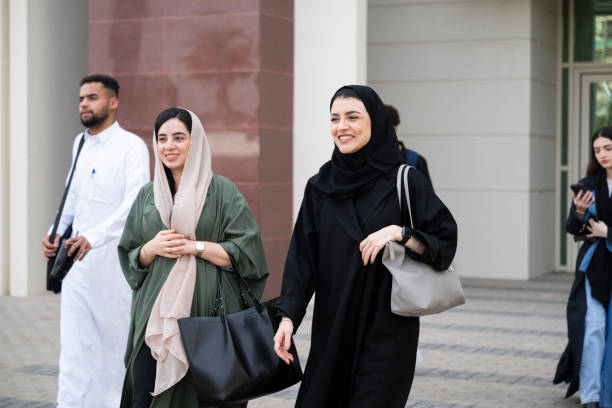
    Today, Emirati women occupy diverse professions and positions, representing the country in all forums. Emirati girls, in turn, continue to rise, following in the footsteps of pioneering women, in a civilizational moment marked by rapid technological advances and regional and global transformations. Here, their role grows ever more significant as partners to young men, completing the journey with worthy successors to worthy predecessors.

    Belief in education, culture, and knowledge is the essence of this story. What women have achieved is not a fleeting privilege, but the result of a vision rooted in our values and identity, and of continuous renewal of tools and opportunities. With every new step, the UAE affirms that its renaissance cannot be complete without the energy of its other half—the woman—who has proven that her partnership is a developmental necessity and a promise of a more balanced and innovative future. Thank you, Mother of the Nation

  • East and West: The Difficult Equation

    East and West: The Difficult Equation

    Since the early 1990s, globalization in its familiar form has taken root: wide market openness and the flow of goods, ideas, and people across borders. With this openness, our lives have changed intellectually, literarily, scientifically, and culturally. Many benefited from opportunities for knowledge and innovation, while others settled for a superficial behavioral layer that imitates appearances and neglects substance—despite the fact that we possess a system of values and customs capable of guiding openness and regulating it.

    Today, voices are rising that call for distancing from globalization and turning eastward, while other currents cling to the West. In my view, the question is not East or West, but rather: how do we restructure a balanced globalization that does justice to both sides and takes a deeply rooted identity as a compass rather than an obstacle? The new globalization is neither withdrawal from the world nor submission to a single pole; it is a broader network of relationships managed with greater awareness of interests and values.

    Practically, balance begins from within: an education system that places languages and sciences on one side, and identity and values on the other—without conflict; media that creates its own narrative instead of importing it; and an economy that diversifies its partners and markets so it is not caught off guard by supply disruptions or policy shifts. As for everyday culture, the measure is simple: whatever enhances dignity, knowledge, and independence is a gain from globalization; whatever weakens awareness or reduces human beings to perpetual consumers is a loss that must be addressed.

    In a world of multiple poles, the value of states and societies capable of playing the role of a bridge increases—connecting rather than dividing, opening up without shedding identity. This requires long-term investment in human capital, in research and development, and in digital infrastructure that protects data and facilitates cooperation, alongside a cultural policy that encourages local production of knowledge and the arts.

  • Sharjah… Smiling with Books

    Sharjah… Smiling with Books

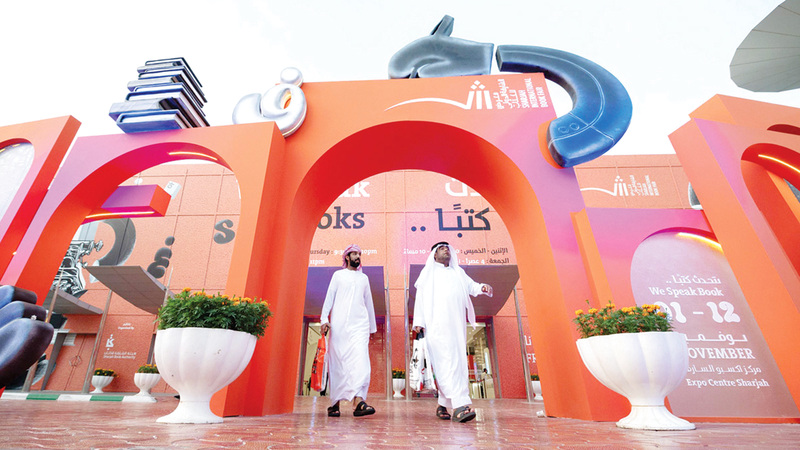
    In radiant Sharjah, the 44th edition of the Sharjah International Book Fair concluded under the slogan “Between You and the Book,” with the participation of more than 2,300 publishing houses from 118 countries and the presentation of over 1,200 cultural and entertainment events for all ages. This was not merely the conclusion of a cultural carnival, but a renewal of an old covenant between the Emirate and books—a covenant that has made Sharjah a meeting place for writers and readers, and a harbor from which stories set sail and return broader in horizon and deeper in meaning.

    Each year, Sharjah reaffirms that culture is not a luxury, but a daily necessity like water and air. Here, questions are shaped and assumptions revisited; a child discovers their first sense of wonder before a shining page; a young person finds in an unknown book a path they once thought blocked; and the seasoned reader rekindles a friendship that has never betrayed them. Between the reader and the book lies a short distance, yet it makes the difference between multiplying ignorance and illuminating knowledge.

    Imagine, even for a moment, if this flood of books and knowledge began to rival the content of social media platforms—if the echoes of seminars, dialogues, and readings extended to the small screens that rarely leave us. The digital space would then become a natural extension of the exhibition halls, and the noise of superficiality would fade before content that elevates taste and refines dialogue.

    From here, I renew my call to writers, thinkers, and publishing houses, and to readers who left the fair carrying a harvest or an idea: fill the platforms with this positive capital. There is no way to confront negative content except by competing with it through content that is higher, truer, and more enduring. Let this year’s edition be the starting signal, and let the book be our lasting bridge between knowledge and life—for us and for generations to come.

  • It is necessary to be diplomatic.

    It is necessary to be diplomatic.

    This week, by diplomacy I mean the art of daily interaction with people—not official or unofficial representation—continuing last week’s article on the indirect representation of the state when we travel and engage with the world in our everyday lives. Every word and every behavior leaves an impact; therefore, diplomacy becomes a life skill before it is a job title.

    The most important rule I have learned and recommend is this: put honey on your tongue before you speak. A kind word and a smile are acts of charity, and they form the first impression in any professional or personal relationship. I specifically highlight the institution’s front line—the reception team. Smile at those who visit you, and strive, regardless of your circumstances, to present yourself appropriately. And if you cannot, that is fine—explain your situation politely. Tell people: “I’m going through a difficult day today; I apologize if I seem gloomy.” Courteous honesty reduces tension and preserves respect—respect for yourself, for the institution, and for your manager.

    Another rule is humility at work. Carry the bag of the one who surpasses you in knowledge, as my late father taught me. This is humility and good manners—not hypocrisy or flattery—but self-discipline in learning and work. Your humility does not diminish your worth; it elevates it. Today you carry the bag symbolically; tomorrow you carry the knowledge itself in substance.

    Daily diplomacy also has simple, effective tools: listen before you speak; separate the person from the problem; and begin your statements with expressions of understanding—“I understand,” “I appreciate,” “Let us agree on…”. Avoid threatening language, and be clear about requests and deadlines. And if you make a mistake, take the initiative to apologize without overexplaining, then propose a specific correction.

    In conclusion, diplomacy is not a behavioral luxury; it is a social competence and a moral trait that builds trust, prevents unnecessary conflicts, and enhances the image of the individual, their institution, and their community. When our good words match our actions, we represent ourselves in the best way—and, in doing so, we represent our organization as well.

  • It Is Not Necessary to Be Diplomatic

    It Is Not Necessary to Be Diplomatic

    At first glance, you might think that I am calling for abandoning the art of daily interaction with people. That is not my intention. I am speaking about diplomacy as the official representation of a state in the world, emphasizing that representation is not limited to appointed diplomats. Each of us, when we cross our country’s borders, becomes its image and its voice.

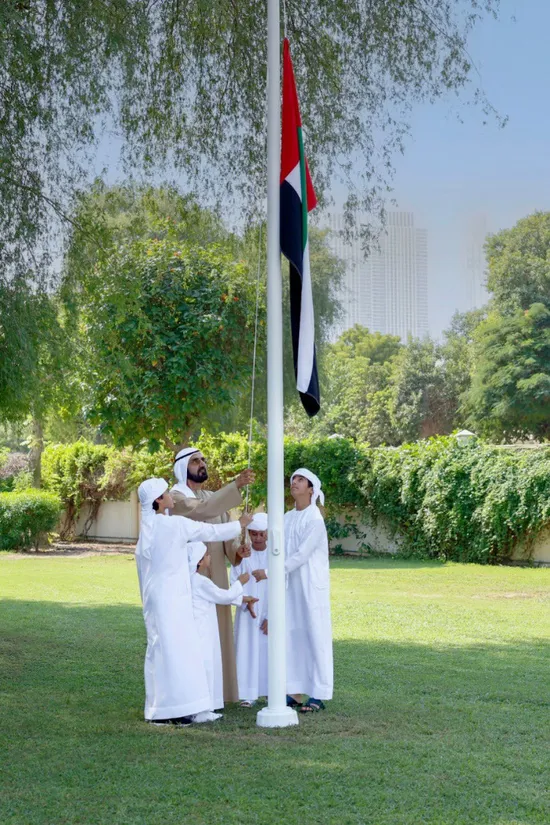
    I write these lines from China, carrying within me the image of the flag fluttering wherever I travel, and asking the question: how do we raise our flag high wherever we go? The brief answer is through high morals. The fuller answer is by turning ethics into a tangible daily practice.

    The story begins the moment we board an airplane, especially on foreign airlines: how do we speak to the crew? How do we maintain the cleanliness of our seat? Then the journey continues at the airport, in taxis, hotels, and restaurants—in our manner of speaking, our respect for others, and our adherence to laws.

    The challenge lies in achieving balance: openness to cultures requires flexibility in appearance and habits, but without shedding one’s identity. Yes to cultural closeness, but with the preservation of belonging. Representing the homeland is reflected in the places we choose, the activities we engage in, the language we use, and the impression we leave behind wherever we pass.

    The conclusion is that representation is not exclusive to those in official positions; it is a responsibility we all share. The wider our presence in the world becomes, the greater the impact of individual behavior on our country’s reputation. I conclude with the timeless words of His Highness Sheikh Mohamed bin Zayed Al Nahyan, President of the State, may God protect him:
    “Any positive thing you do, they will say ‘the Emirati’… and any negative thing, they will say ‘the Emirati.’”

  • Emirati Women at GITEX

    Emirati Women at GITEX

    By kind invitation of H.E. Hamad Obaid Al Mansoori, Director General of Digital Dubai, and hosted by Saeed Al Gergawi, Vice President of the Dubai Chamber of Digital Economy, I had the honor of visiting North Star as part of GITEX, where I witnessed promising projects presented by ambitious young innovators with a strong competitive spirit.

    North Star was a highlight of an exceptional edition that concluded with unprecedented success. GITEX Global 2025 brought together more than 6,800 exhibitors, 2,000 startups from 180 countries, and 1,200 investors, cementing its position as the world’s largest technology and AI event this year.

    What especially caught my attention was the participation of female students from United Arab Emirates University, who showcased pioneering projects in various fields — particularly in healthcare — offering innovative solutions focused on women’s health. This kind of innovation proves that necessity is the mother of invention, and that a deep connection with real societal needs is often the spark that creates valuable products and scalable business models.

    Here lies the true value of North Star as a global platform for entrepreneurs. This year, it attracted over 2,000 startups and 1,200 investors managing assets worth more than USD 1.1 trillion, along with 40 unicorn companies — a reflection of the depth of both knowledge and capital available to those with serious ideas and capable teams.

    What we need today is to export solutions, not just consume them. Consumption is the endless use of technology without understanding its philosophy or impact. Attraction, however, is about bringing in talent and expertise — something the UAE is already doing. The impact grows even greater when the nation’s youth turn this accumulated knowledge into globally competitive products and services.

    To our young men and women: more than ever before — with the power of AI — launching a business has become faster, product development cycles shorter, and experimentation easier. This is a call to unleash your dreams and transform your talents into companies and solutions that tackle real-world challenges — from here, from our platforms, to the world.

  • Teacher… Be an Inspiration

    Teacher… Be an Inspiration

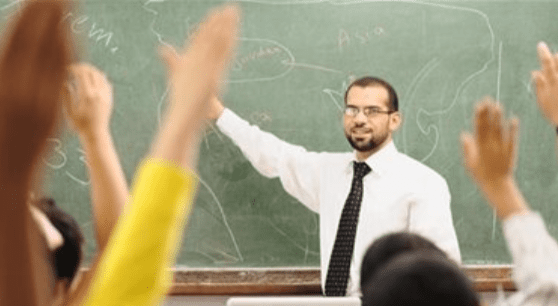
    A tribute to teachers — the builders of tomorrow — upon whose shoulders rests the responsibility for our children and their future. This noble profession has held its esteemed place throughout the ages, remaining a cornerstone in shaping the child’s upbringing, awareness, and values.

    Although the modern school has shifted many educational responsibilities toward purely academic functions, the teacher’s impact on character building remains profound. From early childhood to adolescence, a child spends at least eight hours a day under the school’s care, where the teacher serves as a role model before being a source of knowledge.

    Students in public schools are fortunate to have many teachers who preserve and understand the local environment and identity. Yet the greater challenge often lies in some private schools, where a teacher may — unintentionally and without malice — convey a culture that does not always align with our values, simply by acting naturally within the context that shaped them.

    Where has the teacher’s voice gone in the digital space?
    My message to you, dear teacher: Step into social media. We need your presence in creating Arabic educational content. Share your experience and knowledge online — you are best positioned to influence and inspire. Post short lessons, inspiring stories, useful insights, and linguistic and cultural touches that enrich family and student life.

    Yes, you already make an impact inside classrooms and school walls, but it is time to expand your influence in the virtual world — to strengthen the movement for knowledge and language and to help safeguard our cultural and popular heritage.

    Your mindful presence on digital platforms is no longer a luxury; it is a natural extension of your educational mission: to teach, to inspire, and to build people — wherever they are.

  • Rashid Taught Us

    Rashid Taught Us

    On the anniversary of the passing of the late Sheikh Rashid bin Saeed Al Maktoum — may his soul rest in peace — the builder of modern Dubai and the companion of the late Sheikh Zayed bin Sultan Al Nahyan, may he rest in peace, we remember the wisdom that laid the foundations upon which a visionary leader, Sheikh Mohammed bin Rashid Al Maktoum, Vice President and Prime Minister of the UAE and Ruler of Dubai, has built and flourished.

    I was privileged to grow up hearing many stories from my father, who witnessed firsthand the strong bond between Zayed and Rashid — their shared commitment to the prosperity of their people and the building of a thriving nation. Our car rides were not mere outings for sweets; they were journeys of wisdom.

    Whenever we passed by Dubai World Trade Centre, my father would explain how solid foundations must be laid deep to support a structure that rises proudly on the horizon — turning Dubai into a hub for trade, global delegations, and business leaders. That was the starting point for engraving Dubai’s name on the world map.

    The travels of the late Sheikh Rashid were not leisurely holidays but missions of learning and exploration, where he studied civilizations and technologies, returning with strategies that were transformed into living realities. Among his landmark decisions were the establishment of institutional frameworks for managing emerging wealth, transport, and the judiciary — and the historic Deepening of Dubai Creek project, when sand buildup nearly choked the waterway and threatened navigation. Reviving the creek restored it as a vital artery for trade and a major port, marking a turning point in Dubai’s journey as a commercial hub. Bridges and ports soon followed, making Dubai a key maritime pillar on the East–West trade route.

    Today, on the 35th anniversary of Sheikh Rashid’s passing, his vision is embodied in tangible numbers. Dubai International Airport recorded 92.3 million passengers in 2024, its highest in history, with a plan underway to build a massive new terminal at Al Maktoum International Airport capable of handling up to 260 million passengers. Meanwhile, Jebel Ali Port strengthened its global position with record-breaking achievements, as DP World handled 88.3 million TEUs globally in 2024.

    Economically, Dubai maintained its strong momentum, with GDP reaching AED 119.7 billion in the first quarter of 2025, growing by 4% year-on-year.

    These milestones are living proof of a strategic vision that anticipated the future, infrastructure built ahead of its time, and institutions governed with transparency and openness to the world.

    We, the people of Dubai, are driven by this legacy, looking forward to a future that doubles our logistical capacity, enhances the knowledge economy, and opens doors of opportunity for generations to come.

    Rashid remains a teacher. His life is a lesson in nation-building, and his legacy is a compass that guides us to plan far ahead — so we may reach even farther.